
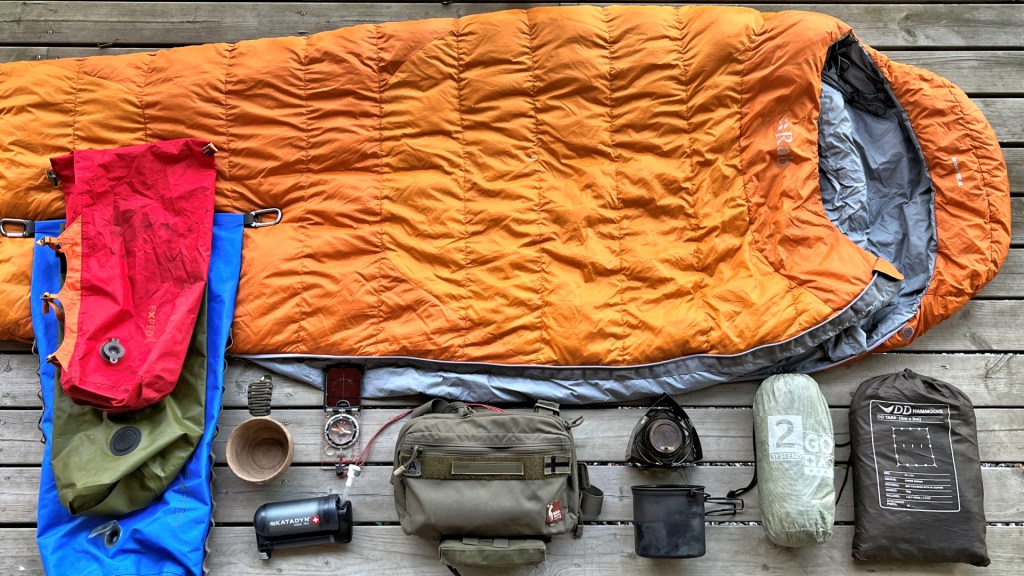
Here’s my personal list of essential hiking and backpacking gear that has become my trusted companions on countless outdoor adventures. These are not the fanciest or newest gadgets on the market, but gear that has proven itself through years of real use. From a durable tarp to a multi-purpose poncho, an efficient water filter, and more, each item has earned its place in my pack. Whether you’re just starting out or already experienced, I hope this guide gives you ideas for what to invest in and what actually works.
1. DD Hammocks 3×3 Tarp (link)
Time tested before review: 9 years
I bought my DD Hammocks 3×3 tarp back in early 2016, and it hasn’t let me down once. I swapped the original lines for paracord and upgraded the stakes, and since then it has provided countless nights of solid shelter. Despite some reports of the PU coating breaking down over time, mine has remained fully waterproof. It’s versatile, reliable, and still my favorite way to camp.
Compared to tents, a tarp feels liberating. You’re closer to nature, you can pitch it in endless ways, and you don’t carry unnecessary bulk just to sleep. If this tarp ever fails, I’ll likely buy the same again, or possibly the ultralight version if it proves equally durable. Until then, this one isn’t going anywhere.
2. 2GoSystems Gear (Trifecta v2, Velar UL, B.O.B. Zip Poncho) (link)
Time tested before review: Trifecta v2 – 9 years | Velar UL – 8 years | B.O.B. Zip Poncho v3 – 4 years
My first 2GoSystems product, the Trifecta v2, became an emergency shelter in my car and proved the company’s approach works. The Velar UL was my next step: lighter, smaller, and just right for solo tarp-style camping with added warmth. Later, the B.O.B. Zip Poncho combined poncho, bivvy, and shelter in one. It’s especially useful outside of the hottest summer months when the reflective liner can otherwise run warm.
These products introduced reflective liners long before they became common. They’ve saved me warmth on cold nights and provided backup shelter options without adding much bulk. I’ve used them heavily, and they’ve held up surprisingly well. It’s fair to say 2GoSystems changed how I pack for unpredictable conditions.
3. Rab Ascent 300 XL Sleeping Bag (link)
Time tested before review: 7 years
The Rab Ascent 300 XL is one of my smartest purchases. It’s a lightweight down bag rated around freezing, which makes it useful for spring, summer, and fall. Down can be intimidating in damp climates, but paired with a tarp and bivvy it’s been excellent. It packs small, feels light, and has kept me warm on countless nights outdoors.
This is the bag I’ve spent the most nights in, hands down. If I could go back and advise my younger self, I’d say to invest in a quality three-season down bag earlier. It’s versatile, reliable, and proof that one well-chosen piece of kit can replace several lesser alternatives.
4. Compression Dry Bags with Valves (MACS, Exped Endura, surplus)
Time tested before review: 7 years
Compression dry bags with valves have completely changed how I pack. By squeezing out excess air, I was able to downsize from a massive 110-liter Berghaus Crusader rucksack to a 65-liter pack without losing capability. Whether it’s clothing, a sleeping bag, or even food, these bags shrink and protect it all.
I use a mix of military surplus stuff sacks and heavier-duty options like the Exped Endura line. They’re durable and waterproof, but admittedly not cheap. Even so, they’ve proven worth the money. Once you start using this type of dry bag, it’s hard to go back to bulky, half-empty packs taking up space in your rucksack.
5. Katadyn Hiker Pro Water Filter (link)
Time tested before review: 6 years
When I finally invested in the Katadyn Hiker Pro in 2019, I realized how much easier water collection could be. Unlike squeeze filters that clog or trickle slowly, this pump moves water quickly and cleanly. The carbon element improves taste, and the pump system is far more practical when you’re refilling after a long hike.
I don’t use it up north where streams run clear and safe, and in winter I rely on snow melting and boiling. But for summer trips, the Hiker Pro has earned its place. It’s fast, dependable, and takes the hassle out of hydration.
6. Kupilka 37 Kuksa (link)
Time tested before review: 8 years
At first I dismissed the synthetic kuksa from Kupilka. I thought if I ever owned one, it should be hand-carved wood. But after getting this one at an event, I quickly realized its value. It’s durable, lightweight, and doesn’t feel plasticky despite being a composite material.
The large size makes it versatile: I eat porridge or oatmeal from it in the mornings and drink coffee from it afterward. Compared to a metal canteen cup, it’s much easier to clean and more practical for daily use. It’s become an indispensable part of my kit.
7. Toaks Titanium 1.1L Pot & Trangia Triangle (link)
Time tested before review: 9 years
This combo makes up my main cook system. The Toaks 1.1L titanium pot is just the right size for solo or two-person trips, and the bail handle allows hanging over a fire. Inside it nests the Trangia Triangle, which with a spirit burner provides a compact, silent, and reliable stove system.
Gas stoves have never appealed to me. The noise alone is enough to ruin the atmosphere. This system works year-round, and I’ve been using it for nearly a decade. Add a homemade foil windscreen, and it’s a setup that’s light, efficient, and built to last.
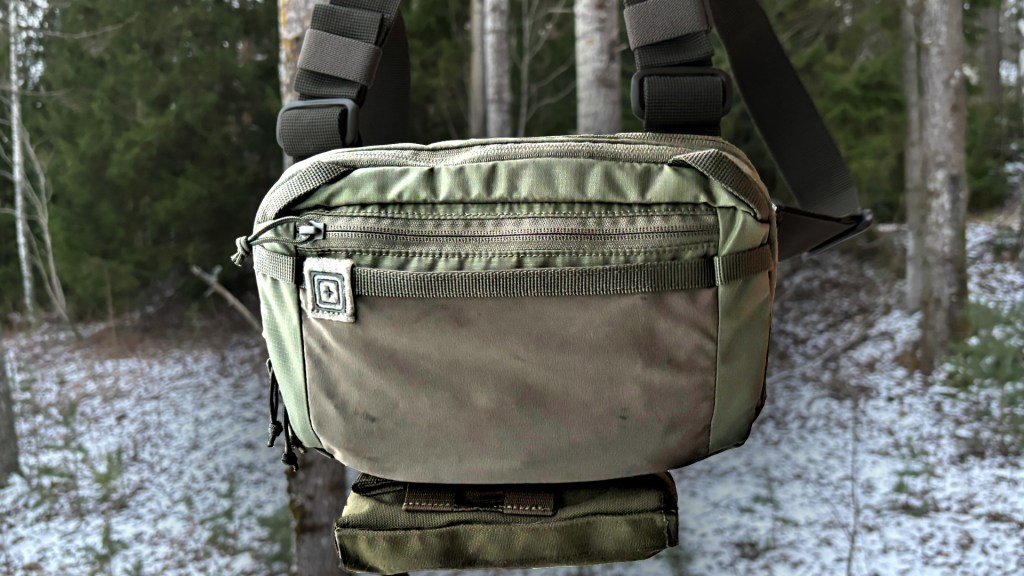
8. Hill People Gear Kit Bag (link)
Time tested before review: 8 years
The Hill People Gear kit bag has transformed how I carry essentials. Maps, compass, GPS, multitool, snacks, fire starters, bug spray—they all live in one chest rig. It stays packed, so when it’s time to go I just throw it on and know I have the essentials.
It’s convenient, secure, and keeps important gear within quick reach. I’ve been through two versions now, and can’t imagine hiking without one anymore. It’s simply one of the most useful systems I own.
9. Suunto MC-2 Compass (link)
Time tested before review: 8 years
A compass might not sound exciting, but a good one is vital. The Suunto MC-2 includes everything: mirror, declination adjustment, glow-in-the-dark markings, magnifier, and solid build. It’s far better than the cheap models I used early on.
It doubles as a signaling mirror, a way to clean grit from your eye, or a navigation tool in poor light. Paired with topo maps, it’s a system that won’t fail. I’ve trusted it for years, and it’s one piece of kit I expect will last many more.
10. Northern Lite Waterproof Rain Mittens (link)
Time tested before review: 2 years
For transparency: these mittens were sent to me by the company, but with no obligations or requirements to review them. Since then, I’ve carried them on every trip. They weigh nearly nothing, pack tiny, and cover where a poncho leaves your arms exposed. On summer trips, they work alone. In colder months, they fit easily over gloves.
Northern Lite has since become a bigger part of my kit. I bought their Waterproof Ventilated Rain Jacket Superlite myself, and received their Vapor Barrier Layer Socks as a Christmas gift. The mittens and socks in particular have been game changers: the mittens for constant packability, the socks for keeping my feet warm while winter fatbiking. It’s a great example of a small Finnish company making smart gear.
Final thoughts
After nearly a decade of testing, these items have proven themselves on countless hikes and trips. They’ve earned a permanent place in my kit not because they’re trendy, but because they work, year after year. If you’re starting out, maybe this gives you ideas for where to invest. If you’re more experienced, perhaps it’s a reminder of the value of reliable gear that stands the test of time.
I hope this list helps you make better choices and avoid wasting money on gear that doesn’t last. As always, feel free to ask questions. I’m happy to share what I’ve learned.
 Field Gear Report
Leave a comment